Skip to content

Space IQ Challenge: How Much Do You Really Know?

10 questions3 minutes

Description

10 surprising space facts that will test your cosmic knowledge. From diamond rain to floating planets, see how you score!

Author
QuizQuip Editorial
Published
06/17/2026
Estimated Time
3 minutes
Quiz Language
English

Test what you actually know

What you get after finishing

Answer at your own pace, then check every answer against its explanation.

Your score, the correct answer to each question, and a short explanation of why, plus a link to challenge a friend.

Send this to a friend
Social network hub7 destinations
WhatsAppInstagramXThreadsFacebook

The questions

All 10 questions in this quiz. Correct answers stay hidden until you finish.

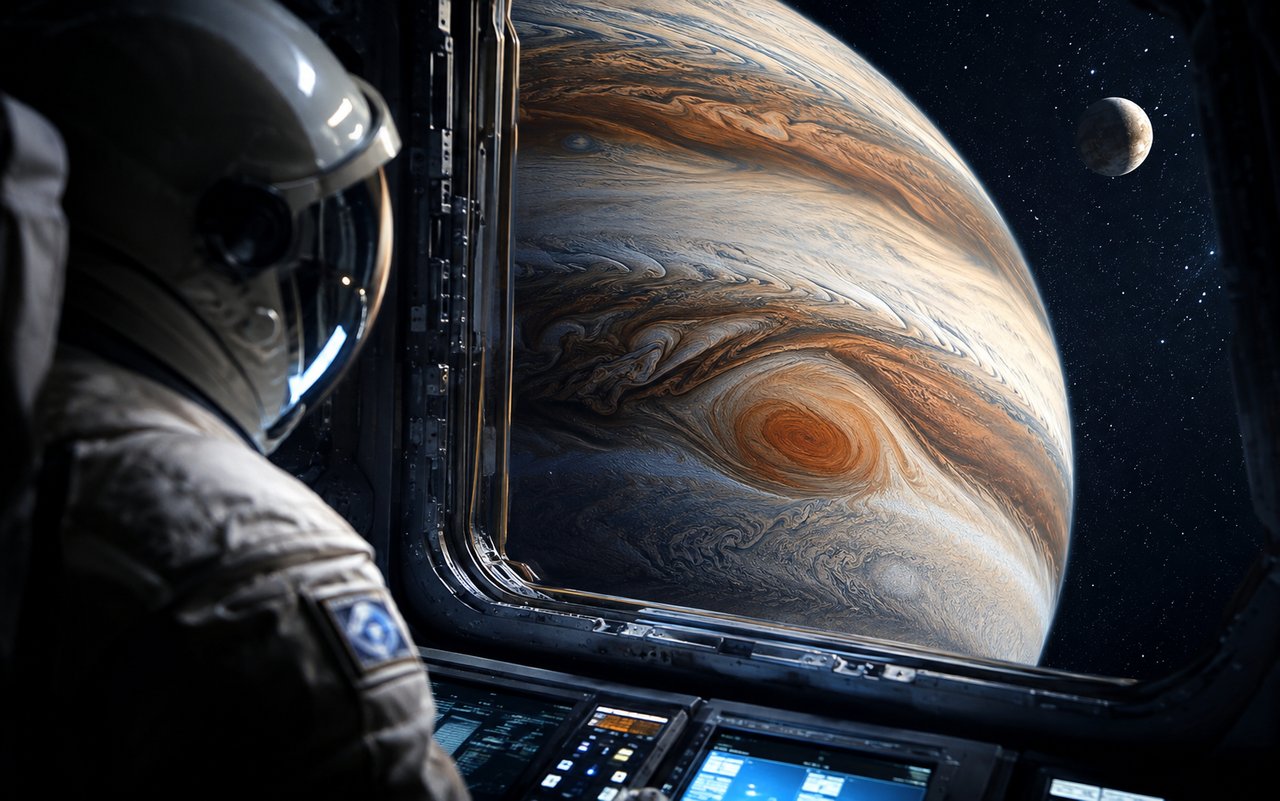
  1. What is Jupiter's Great Red Spot?

    • An active volcano taller than Everest
    • A giant storm that has lasted at least 400 years
  2. How much would a sugar-cube-sized piece of a neutron star weigh?

    • About a billion tons, roughly the weight of a mountain
    • A few grams, just like regular sugar
  3. What is unusual about Venus's rotation?

    • It rotates faster than any other planet
    • It spins backwards, so the Sun rises in the west
  4. How long do astronaut footprints last on the Moon?

    • Millions of years, because there is no wind to erase them
    • A few years at most before they weather away
  5. If you placed Saturn in a giant bathtub, what would happen?

    • It would immediately sink to the bottom
    • It would float, because it is less dense than water
Show the other 5 questions
  1. Can sound travel through outer space?

    • No, space is a vacuum and sound waves need a medium to travel
    • Yes, and sound actually travels faster in space
  2. Are there more stars in the universe or grains of sand on Earth's beaches?

    • More sand grains, by a wide margin
    • More stars — the observable universe has over a trillion galaxies
  3. What kind of precipitation falls deep inside Neptune and Uranus?

    • Diamond rain — extreme pressure splits methane into carbon
    • Plain liquid water rain, just like on Earth
  4. Whose clock ticks slower — astronauts on the ISS or people on Earth?

    • The astronauts' clock ticks faster because they are farther from Earth
    • The astronauts' clock ticks slightly slower, due to time dilation
  5. What fraction of the solar system's total mass does the Sun account for?

    • About 99.8%, with everything else making up the rest
    • About half, with the planets sharing the other half

Score bands

Your final score places you in one of these bands.

Space Newbie0–30 points
To you, space is just pretty lights in the night sky and the occasional shooting star. That is okay — looking up is half the fun.
Stargazer31–60 points
You have watched your share of science documentaries and know the solar system better than most. Dig a little deeper and you will be unstoppable.
Cosmic Expert61–80 points
Your space knowledge beats most people you know. Friends look to you whenever astronomy comes up. Your trivia arsenal is impressive.
Interstellar Navigator81–100 points
Near-perfect or perfect — your cosmic knowledge is at pro level. NASA might actually want your resume.

How this quiz works

Each question has one correct answer. When you finish, you get your score and can review every question with the correct answer and, where we have one, a short explanation.

About this quiz

Published by QuizQuip Editorial. Last updated 09/15/2026.

Comments